

A Couple of Significant Reads
Sometimes we get the chance in the blog to make some reading recommendations, and I have recently completed two books which I felt were very worthwhile. I’ll say a little bit about them both individually, but if there was a thread which unites them, it’s the thread of authenticity or truthfulness. There are times when you read a book that you feel, particularly if it’s non fiction, that the writer is maybe holding certain things back. They may have a concern that, in revealing the truth, they don’t always come out of the narrative looking so good themselves, so they tend to say less rather than more and allow the reader to come to their own conclusions.
I have always enjoyed sporting autobiographies and find it fascinating to read about what makes these great players tick. Who, or what, were the motivations for them achieving greatness in their sport? How did they prepare for the big games or contests? Did they feel stress or anxiety on these occasions, and how did they deal with these things?
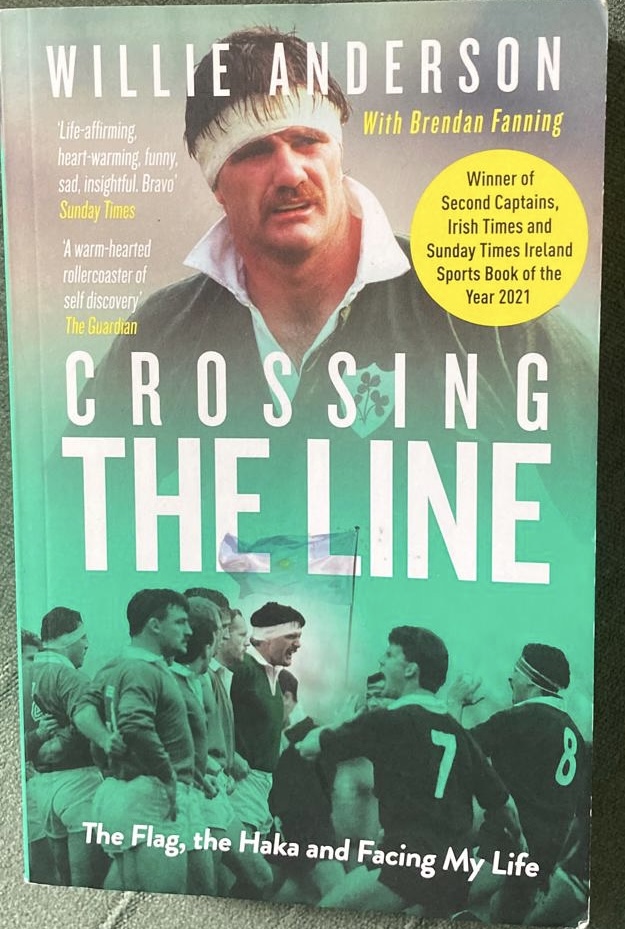
Former Irish rugby international, Willie Anderson, straddled the game in both its amateur and professional eras. He played in that amateur era and combined his playing days with a career as a PE teacher and then entered the world of coaching. His brilliant memoir, ‘Crossing the Line, The Flag, the Haka and Facing My Life’ outlines his upbringing on a farm, how he fell in love with the game of rugby and all the doors it opened for him. He speaks of the camaraderie and friendships which traversed geography and denominational boundaries, and he details two of the incidents that many associate with his career.
As a student he toured Argentina with a touring team made up of provincial players and, after a prank, he ended up incarcerated in an Argentinian prison for lifting an Argentinian flag at a time when the totalitarian regime did not look on these matters lightly. This was a tough and gruelling experience physically and emotionally, and it was the love and support from home through letters and cards, not least from the woman who would later become his wife, that sustained him.
Willie went on to play for Ulster and for Ireland getting capped for the first time at the relatively advanced age of 29. He memorably faced down the famous Haka, or war dance of the New Zealand All Blacks when they squared up against Ireland. Willie was a plain speaking man and, sometimes, his truthfulness and directness got him into trouble. He spoke at times about the troubles and the impact of living in a divided society. When he entered the world of coaching and worked at the highest level with Leinster, London Irish and Scotland, and led Dungannon to a memorable All Ireland League triumph in 2001, he never got the opportunity to coach the Ulster team at senior level. Perhaps the face didn’t fit, or his honesty may not have been the easiest thing to work with at times.
Willie speaks with unflinching honesty in this memoir about the highs and lows of his life, including a tragic accident which claimed the life of a young boy, Glen McLernon, his struggles with depression and alcohol dependence, as well as his successes. He speaks with such deep affection, love and appreciation for his family, and of the impact people of faith have had upon his life. I found it a most inspiring and powerful read, and you can listen to a conversation with Willie in this week’s podcast, the link is below at the bottom of the blog or on our Facebook page.
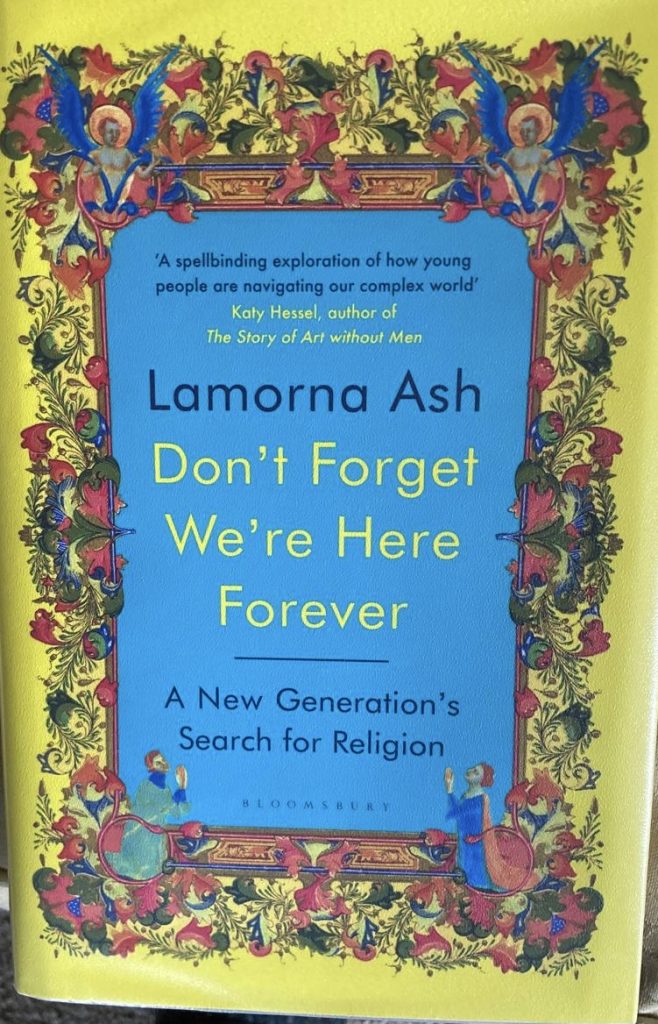
The second book is about the quest of a young woman for faith. When a friend of hers found faith in his twenties and went on to pursue ordination in the Church of England, it triggered an exhaustive journey for journalist, Lamorna Ash. I found it fascinating to read how honestly she documented her experiences through different denominations and courses and pilgrimages.
She went on a course called Christianity Explored. She met Pentecostals. She went on pilgrimage with Roman Catholics to Waltsingham, a place of devotion to the Virgin Mary. She went to Quaker meeting houses, monasteries and the island of Iona. She spoke with people who were filled with faith and those who had left the life of faith.
It’s interesting to hear someone describe these things who is not themselves all that familiar or immersed in church culture. Sometimes we, who inhabit that culture, think we are good at certain things, or come across in a certain way, when that might not be the reality others experience.
It’s not always an easy or comfortable read, but I found it incredibly honest and engaging as she opened herself up to this very important search. It was clear that these experiences impacted her very significantly. She had many questions about how faith affected people’s personality and behaviour. She was moved by the transformation she saw in people’s lives. She was envious too, at times, when she saw people experiencing things she didn’t feel herself. She was pretty direct in her criticisms, but also generous and tender as she opened up about how her faith journey and church family had been a support to her during a time of personal struggle and difficulty within her family as her mother struggled with serious health issues..
As I try to understand the world I live in, and the spiritual landscape in which so many of our churches are trying to minister and connect, I believe it’s one of the most important books I have read in some years.
I borrowed this one from the library, and my mum passed me on the memoir, as she, too, loves autobiographies. Both are well worth your time.
Look forward to speaking again soon.
Much love to everyone,
Jono.
Listen to the latest episode of ‘Bitesize Chunks of Faith’